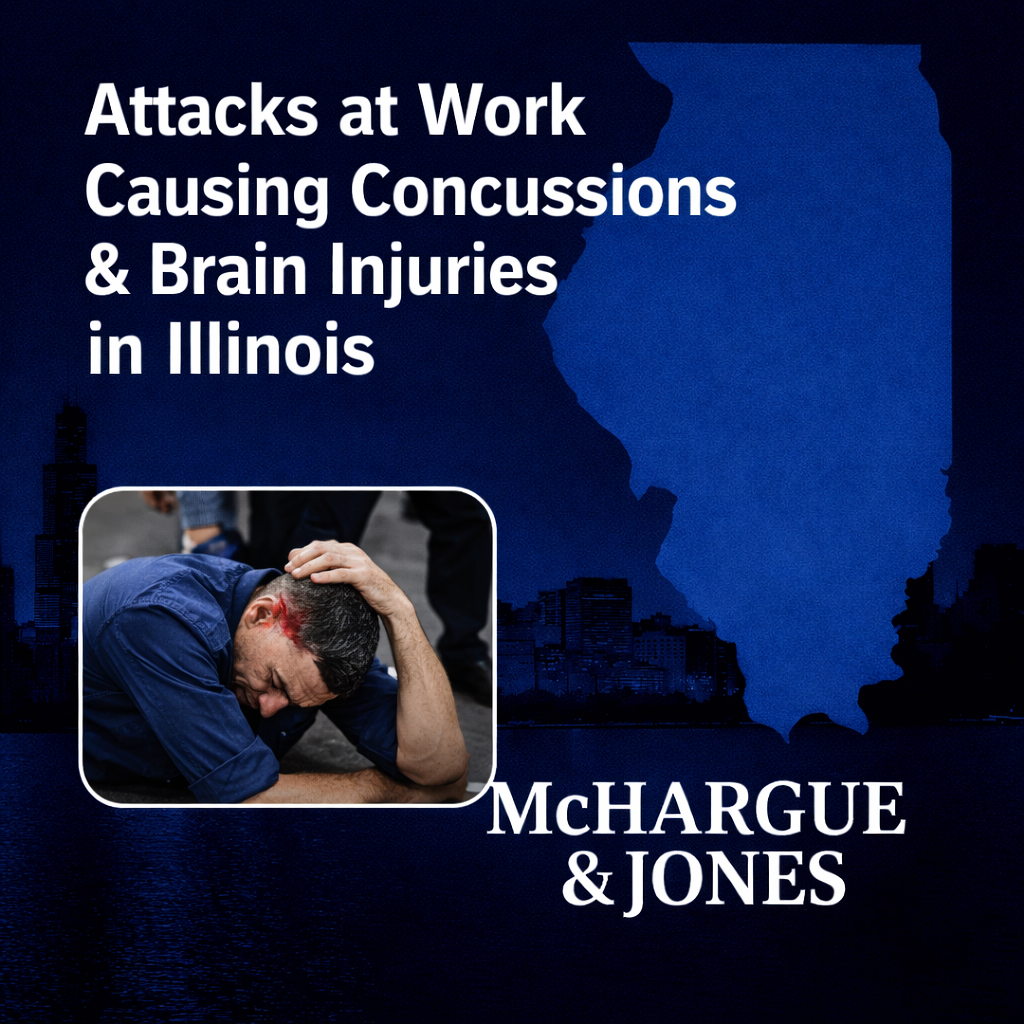


Attacks at Work Causing PTSD in Illinois Workers’ Compensation
Workplace attacks are one of the most common causes of post-traumatic stress disorder (PTSD) among Illinois workers. Employees who are assaulted, threatened, or violently confronted at work may develop PTSD even if their physical injuries heal—or even if no physical injury occurred at all. In certain situations, PTSD caused by a workplace attack may be covered under Illinois workers’ compensation law. This page explains how attacks at work lead to PTSD, when these claims qualify for workers’ compensation, and how assault-related PTSD cases are evaluated in Illinois.
Workplace Attacks That Commonly Lead to PTSD
PTSD often develops after sudden, frightening, or violent workplace incidents where a worker reasonably fears serious harm or death. Common examples include:
- Assaults by patients, customers, inmates, or clients
- Being punched, kicked, bitten, or restrained during an altercation
- Being threatened with weapons or serious violence
- Robberies or attempted robberies
- Physical confrontations with coworkers or third parties
Even a single incident can be enough to trigger PTSD, especially when the worker feels helpless or unable to escape.
Jobs With Higher Risk of Assault-Related PTSD
Some professions face an elevated risk of workplace attacks and resulting PTSD, including:
- Nurses and healthcare workers
- Mental health professionals
- Correctional officers and detention staff
- Social workers and case managers
- Teachers and school employees
- Retail and service workers
- Delivery drivers and transportation workers
Healthcare workers, in particular, face a well-documented risk of assault-related trauma. Learn more in our resource on nurses attacked by patients.
PTSD Symptoms After a Workplace Assault
PTSD symptoms may appear days, weeks, or months after an attack and can significantly interfere with work and daily life. Symptoms commonly include:
- Anxiety or panic attacks
- Hypervigilance or exaggerated startle response
- Flashbacks or intrusive memories of the attack
- Fear of returning to the workplace
- Avoidance of people, places, or tasks associated with the incident
- Sleep disturbances and nightmares
- Irritability, anger, or emotional numbness
When these symptoms affect job performance or safety, workers’ compensation benefits may be available.
Is PTSD From a Workplace Attack Covered by Illinois Workers’ Compensation?
PTSD caused by a workplace attack may be compensable under Illinois workers’ compensation law, depending on the circumstances.
Physical–Mental PTSD Claims After an Attack
If a workplace assault causes a physical injury—such as a concussion, traumatic brain injury (TBI), or other bodily harm—and PTSD develops as a result, the claim is generally considered a physical–mental claim. These claims are often stronger and more likely to be covered.
Related resources include:
Mental–Mental PTSD Claims After an Attack
When PTSD develops from a workplace attack without a physical injury, the claim may still be evaluated under Illinois law, but these cases are more closely scrutinized. Medical documentation, the severity of the incident, and legal standards play a critical role.
Workers’ Compensation Benefits for Assault-Related PTSD
When PTSD from a workplace attack qualifies for coverage, workers’ compensation may provide the following benefits:
Medical Treatment
- Psychological or psychiatric care
- Trauma-focused therapy or counseling
- Prescription medication for anxiety, depression, or sleep disorders
Wage-Loss Benefits
- Temporary Total Disability (TTD) if PTSD prevents working
- Temporary Partial Disability (TPD) if returning to restricted duty
Permanent Disability Benefits
In severe cases, assault-related PTSD may permanently limit a worker’s ability to return to their prior job or any employment, resulting in permanent disability benefits.
PTSD can significantly affect the overall value of a claim. For broader valuation context, see how much a workers’ compensation case may be worth.
PTSD, Brain Injuries, and Workplace Violence
Workplace attacks often involve both psychological trauma and physical injuries. Assaults may cause concussions, traumatic brain injury (TBI), neck injuries, or other harm that compounds PTSD symptoms. You may find yourself treating with a neurologist, as well as a pyschologist, and perhaps other specialists. The doctors may have to prepare special reports or testify in a deposition to explain what symptoms and limitations are due to which diagnosis, as there can be significant overlap between a TBI and PTSD.
You may find these related resources helpful:
- Concussion and brain injuries at work in Illinois
- How much is a concussion or TBI worth in Illinois workers’ compensation?
How Insurance Companies Dispute PTSD Claims After Attacks
Insurance companies often attempt to limit assault-related PTSD claims by arguing:
- The symptoms are subjective or exaggerated
- PTSD is unrelated to work
- The worker can return to work despite symptoms
- Psychological treatment is unnecessary
Strong claims rely on prompt reporting, consistent medical treatment, and credible mental health evaluations.
When to Speak With an Illinois Workers’ Compensation Lawyer
Legal guidance may be especially important after a workplace attack if:
- PTSD symptoms persist or worsen
- You are afraid or unable to return to work
- Benefits are denied or delayed
- The employer disputes that the attack was work-related
- Permanent disability is a concern
Frequently Asked Questions About PTSD From Workplace Attacks
Can a workplace assault cause PTSD?
Yes. Workplace assaults are a common cause of PTSD, particularly when the worker feared serious harm or death.
Is PTSD from an attack at work covered by workers’ compensation?
PTSD from a workplace attack may be covered under Illinois workers’ compensation, depending on whether it involved a physical injury or meets legal standards.
Do I need a physical injury for an assault-related PTSD claim?
Not always. Claims with a physical injury are generally stronger, but some PTSD-only claims may still be evaluated.
Can assault-related PTSD prevent a return to work?
Yes. Severe PTSD can make it unsafe or impossible to return to certain jobs or work environments.
By Matthew C. Jones
Matthew C. Jones is an Illinois workers’ compensation attorney representing injured workers in cases involving workplace assaults, PTSD, traumatic brain injuries, and permanent disability.
https://mcharguelaw.com/meet-our-legal-team/matthew-c-jones/