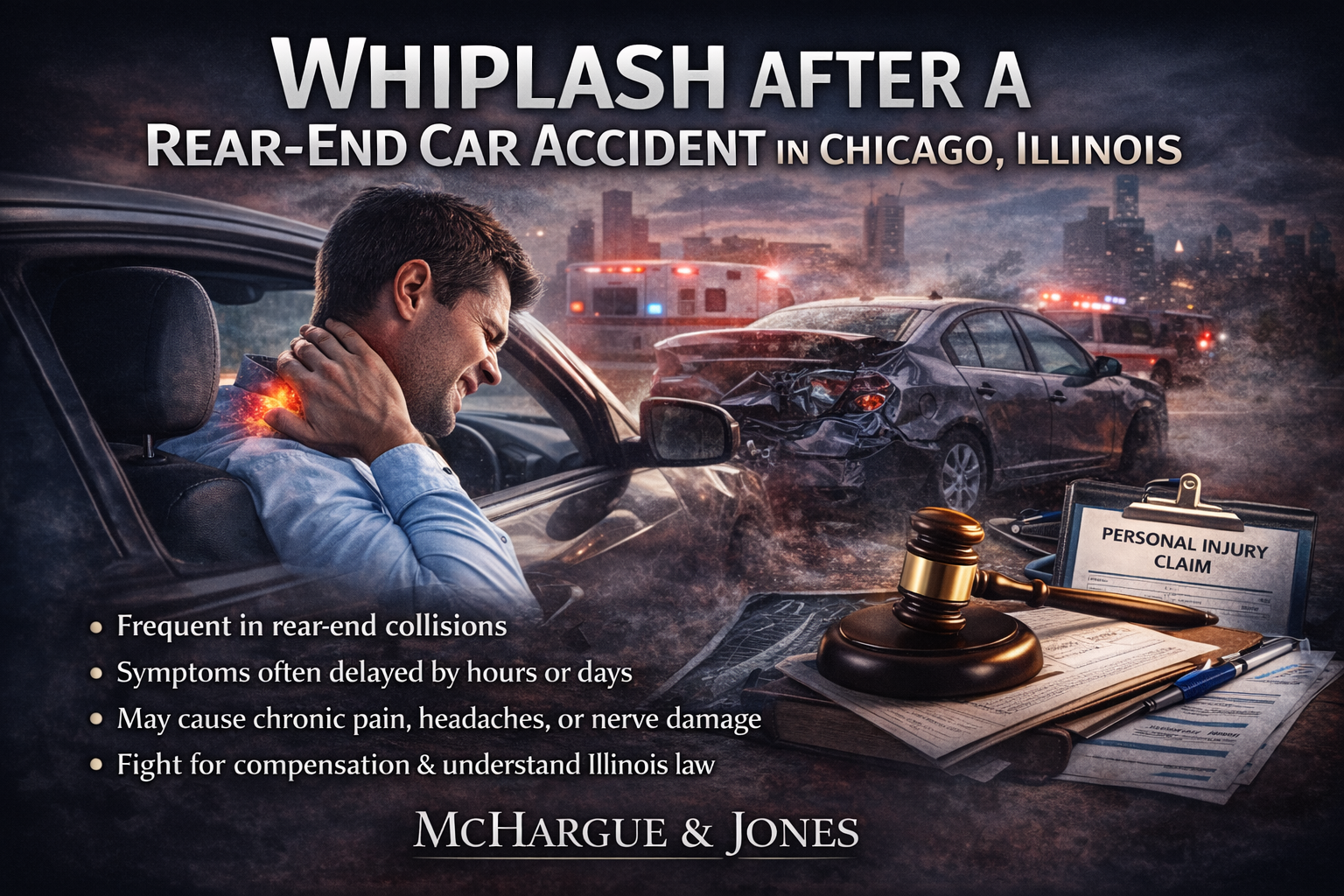


Whiplash After a Rear-End Car Accident in Chicago, Illinois
Whiplash is one of the most common injuries after a rear-end car accident—even when vehicle damage looks minor. The sudden back-and-forth motion of the head and neck can strain muscles and ligaments, irritate nerves, and trigger headaches, dizziness, and chronic pain. Because symptoms often appear hours or days later, getting medical care and documenting your injury early can protect both your health and any Illinois injury claim you may need to pursue.
If you were injured in a rear-end crash in Chicago or anywhere in Illinois, McHargue & Jones, LLC can help you understand your options under Illinois law. Start here:
Car Accidents: https://mcharguelaw.com/personal-injury/car-accidents/
Rear-End Accidents: https://mcharguelaw.com/personal-injury/car-accidents/rear-end-accidents/
What Is Whiplash?
Whiplash is a neck injury caused by a rapid acceleration–deceleration force that snaps the head backward and forward (or side-to-side). It most often happens in rear-end collisions when a stopped or slowing vehicle is struck from behind.
Medical providers commonly describe whiplash as a strain or sprain affecting the soft tissues of the neck, with symptoms ranging from mild soreness to long-term pain and neurological complaints.
Medical references:
-
Mayo Clinic (diagnosis/treatment): https://www.mayoclinic.org/diseases-conditions/whiplash/diagnosis-treatment/drc-20378926
-
Cleveland Clinic (overview/symptoms): https://my.clevelandclinic.org/health/diseases/11982-whiplash
Why Rear-End Crashes Cause Whiplash (Even at Low Speeds)
In a rear-end crash, the body is pushed forward with the seat while the head lags behind—then the head rebounds forward. That “whip-like” movement can overstretch soft tissue and aggravate cervical discs and nerves.
Rear-end collisions often happen because the at-fault driver is:
-
Following too closely
-
Distracted
-
Speeding
-
Impaired
-
Not braking in time in stop-and-go traffic
If you suspect distraction or impairment, these resources may help:
-
Distracted driving: https://mcharguelaw.com/personal-injury/car-accidents/distracted-driving-accidents/
-
Drunk driving: https://mcharguelaw.com/personal-injury/car-accidents/drunk-driving-accidents/
And speeding often makes whiplash worse by increasing the force of impact:
Speed limits & liability: https://mcharguelaw.com/car-accidents/how-speed-limits-are-set-why-that-matters/
Whiplash Symptoms (Including Delayed Symptoms)
One reason whiplash is underestimated is that many people feel “okay” at the scene, then develop symptoms later—often within 24–72 hours.
Common symptoms include:
-
Neck pain, soreness, or stiffness
-
Reduced range of motion
-
Headaches (including migraines)
-
Shoulder/upper back pain
-
Tingling, numbness, or weakness in the arms
-
Dizziness or balance issues
-
Blurred vision
-
Fatigue or sleep disruption
-
Concentration or memory problems
If you notice new or worsening symptoms after a crash, seek evaluation promptly and follow your provider’s care plan.
How Is Whiplash Diagnosed?
Whiplash is often diagnosed using:
-
Physical examination (range of motion, tenderness, neurological screening)
-
Imaging when appropriate (X-rays, CT, MRI) to rule out fracture, disc issues, or other conditions
Not every case requires advanced imaging, but serious symptoms or neurological complaints may warrant further evaluation.
How Long Does Whiplash Last?
Recovery depends on severity, prior conditions, and consistent treatment.
-
Mild cases: may improve within weeks
-
Moderate cases: can last months
-
Severe cases: may become chronic (ongoing pain, headaches, nerve symptoms)
Some people develop longer-term “whiplash-associated disorders,” especially when symptoms are significant early on.
Can Whiplash Cause Long-Term or Permanent Problems?
In some cases, yes—particularly when whiplash involves nerve irritation, disc injury, or significant soft tissue damage. Older adults and people with preexisting neck/back conditions may be more vulnerable.
If a crash causes severe, life-changing impairment, learn more here:
Catastrophic injuries after auto accidents: https://mcharguelaw.com/personal-injury/catastrophic-injuries-after-auto-accidents/
Treatment Options for Whiplash
Treatment varies by patient and severity. Common options include:
-
Short-term rest and activity modification
-
Ice/heat therapy
-
Over-the-counter or prescription pain relief (as advised by a clinician)
-
Physical therapy and guided exercises
-
Posture and ergonomic corrections
-
In certain cases, injections or specialty pain management
Medical references:
-
Mayo Clinic treatment overview: https://www.mayoclinic.org/diseases-conditions/whiplash/diagnosis-treatment/drc-20378926
-
Cleveland Clinic treatment overview: https://my.clevelandclinic.org/health/diseases/11982-whiplash
Whiplash Claims in Illinois: Liability, Damages, and Deadlines
Illinois is an at-fault state—meaning the driver who caused the crash is responsible for resulting damages. A whiplash claim may include compensation for:
-
Medical bills (including future care when supported by evidence)
-
Lost wages / reduced earning capacity
-
Pain and suffering
-
Emotional distress (when applicable)
To understand fault rules and comparative negligence in Illinois, read:
Is Illinois a no-fault state?: https://mcharguelaw.com/personal-injury/is-illinois-a-no-fault-car-accident-state/
Deadline note: Many Illinois personal injury lawsuits must be filed within two years of the injury (with exceptions in certain circumstances).
Illinois statute reference: https://www.ilga.gov/Documents/legislation/ilcs/documents/073500050K13-202.htm
Insurance Policy Limits (Why “Clear Liability” Isn’t Always Enough)
Even when the other driver is clearly at fault, your recovery may be limited by available insurance coverage.
Illinois minimum liability coverage is often:
-
$25,000 per person / $50,000 per accident
If the at-fault driver has minimum coverage and no collectible assets, additional options may include:
-
Underinsured motorist (UIM) coverage
-
Uninsured motorist (UM) coverage
-
MedPay coverage
-
Umbrella policies
If the crash involved a commercial driver or company vehicle, higher limits may apply:
Truck accidents: https://mcharguelaw.com/personal-injury/truck-accidents/
For broader injury guidance:
Personal injury: https://mcharguelaw.com/personal-injury/
What to Do After a Rear-End Crash If You Suspect Whiplash
-
Get medical evaluation promptly (even if symptoms are mild)
-
Follow treatment instructions and avoid gaps in care
-
Keep records: visit notes, imaging, prescriptions, PT appointments
-
Document symptom progression (headaches, sleep issues, arm numbness, etc.)
-
Be cautious with recorded statements to insurers
-
Speak with a lawyer before accepting a quick settlement
Frequently Asked Questions About Whiplash in Illinois
Can you get whiplash in a low-speed rear-end accident?
Yes. Even low-speed rear-end collisions can cause whiplash because the injury is about rapid neck motion—not just visible vehicle damage.
How long after a crash do whiplash symptoms appear?
Many people feel symptoms immediately, but others develop symptoms within 24–72 hours.
Is whiplash a “soft tissue” injury—and does that matter?
Whiplash is often considered a soft tissue injury, but it can still be painful, disruptive, and long-lasting. Consistent medical documentation is important.
Can I recover compensation for whiplash in Illinois?
If another driver caused the crash, you may be able to recover compensation for medical bills, lost income, and pain and suffering.
What if the other driver was speeding or distracted?
Speeding and distraction can strengthen a negligence case. Helpful resources:
-
Speed limits & liability: https://mcharguelaw.com/car-accidents/how-speed-limits-are-set-why-that-matters/
-
Distracted driving: https://mcharguelaw.com/personal-injury/car-accidents/distracted-driving-accidents/
What if the at-fault driver only has minimum insurance?
Your recovery may be limited by policy limits unless other coverage applies (like your own underinsured motorist coverage or umbrella coverage).
Talk to a Chicago Whiplash Lawyer at McHargue & Jones, LLC
Whiplash can seem minor at first—but delayed symptoms and long-term complications are common. McHargue & Jones, LLC represents car accident victims throughout Chicago and Illinois and can help you understand your rights after a rear-end collision.
Call (312) 739-0000 to schedule a free consultation.
Disclaimer: This article is for informational purposes only and does not constitute legal advice.