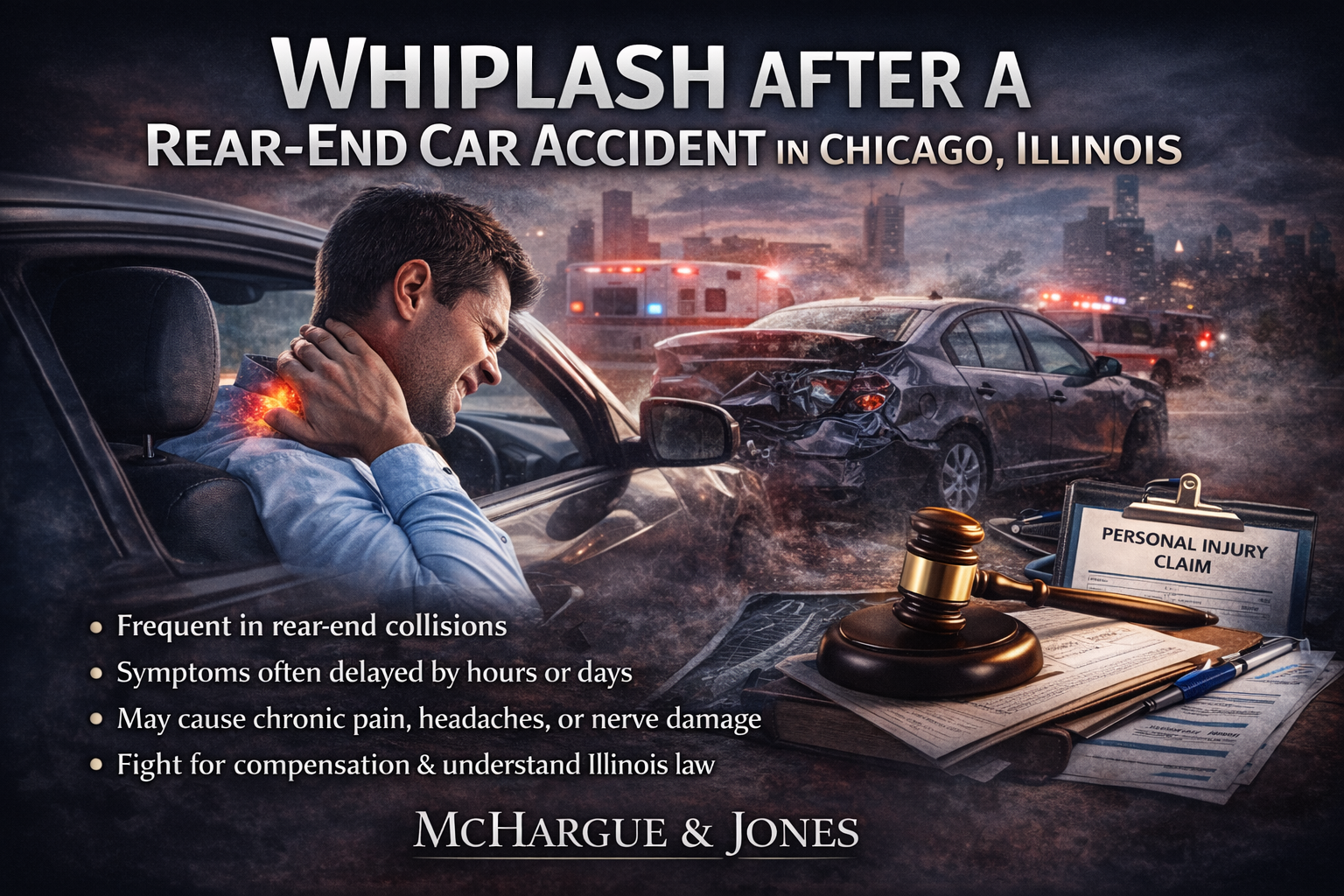


Whiplash After a Rear-End Car Accident: Injuries, Treatment, and Case Value
Updated April 30, 2026
A whiplash injury car accident settlement in Illinois can range from a few thousand dollars to much more, depending on the medical treatment, length of symptoms, pain and suffering, lost wages, fault, and available insurance coverage.
Many whiplash claims involve rear-end accidents, delayed neck pain, headaches, stiffness, physical therapy, and soft tissue injury to the neck. Some resolve quickly. Others last for months or develop into more serious cervical spine claims.
Bottom line: there is no single “average” whiplash settlement that applies to every case. A short-term whiplash case may be worth far less than a claim involving months of treatment, missed work, radiating pain, or long-term limitations.
What Is the Average Settlement Payout for a Whiplash Injury?
For many car accident whiplash cases, settlement value often falls somewhere between $5,000 and $50,000. Some mild cases are worth less, while more serious cases can be worth more.
A common range for a relatively straightforward whiplash case with physical therapy, doctor visits, and no surgery is often in the thousands to low tens of thousands. Cases involving longer treatment, MRI findings, nerve symptoms, missed work, or permanent limitations can be higher.
For more specific non-surgical neck injury settlement ranges, see our guide to
neck sprain and strain settlement value after a car accident in Illinois.
What Is a Fair Settlement for Whiplash?
A fair whiplash settlement should account for more than just the medical bills.
It should consider:
- medical expenses
- physical therapy
- pain and suffering
- lost wages
- loss of normal life
- future care if supported by medical evidence
- available insurance coverage
A low offer may not be fair if it ignores ongoing pain, missed work, delayed symptoms, or the impact on daily life. But a case may also be limited by weak documentation, gaps in care, disputed fault, or low policy limits.
Is There a Minimum Compensation Amount for Whiplash?
No. There is no guaranteed minimum payout for whiplash in Illinois.
The value depends on the facts of the case. A person with a few days of soreness and no treatment will usually have a very different claim than someone who needs months of therapy, misses work, and has documented ongoing pain.
Insurance companies often make early low offers in whiplash cases because they expect people to settle before they understand the full injury.
What Makes a Whiplash Settlement Worth More?
The strongest whiplash cases usually have consistent medical proof and a clear impact on daily life.
Important value factors include:
- Medical treatment: ER care, doctor visits, physical therapy, imaging, or specialist care
- Duration of symptoms: weeks versus months of pain
- Pain and suffering: headaches, stiffness, sleep problems, and daily limitations
- Lost wages: missed work or reduced ability to work
- Objective findings: imaging, range-of-motion findings, or neurological symptoms
- Insurance coverage: the at-fault driver’s policy may limit recovery
For a broader explanation of how these issues affect injury value, read our guide to
how much a car accident case is worth in Illinois.
What Is Whiplash?
Whiplash is a neck injury caused by rapid back-and-forth movement of the head and neck. It is common in rear-end collisions because the body is pushed forward while the head snaps backward and then forward.
Doctors often describe whiplash as a neck sprain or strain. It usually involves soft tissue such as muscles, ligaments, tendons, and supporting structures in the neck.
Whiplash is common, but it should not automatically be dismissed as minor. Some cases resolve quickly. Others cause months of pain, headaches, sleep problems, and functional limitations.
Can You Get Whiplash in a Low-Speed Car Accident?
Yes. Whiplash can happen even when the vehicle damage looks minor.
Insurance companies often argue that a low-speed crash could not have caused a real injury. But whiplash depends on how the body moved during impact, not just how the bumper looks afterward.
Rear-end collisions are one of the most common causes. For more on how these crashes happen, see our guide to
rear-end car accidents in Illinois.
What Are Common Whiplash Symptoms After a Car Accident?
Whiplash symptoms may appear right away or develop over the next 24 to 72 hours.
Common symptoms include:
- neck pain
- neck stiffness
- reduced range of motion
- headaches
- upper back or shoulder pain
- dizziness
- sleep problems
- fatigue
- numbness, tingling, or weakness in the arms
Arm numbness, tingling, weakness, or radiating pain can be a sign of nerve irritation or a more serious cervical spine issue.
How Long After a Crash Can Whiplash Symptoms Appear?
Whiplash symptoms often show up within the first few days after a crash.
Many people feel shaken up at the scene but do not feel the full injury until the next day. This delay is one reason insurance companies dispute whiplash claims.
If symptoms develop, medical care should not be delayed. Early treatment helps protect your health and creates records connecting the injury to the crash.
Should You See a Doctor for Whiplash?
Yes. If you have neck pain, headaches, stiffness, dizziness, numbness, or delayed symptoms after a crash, you should get evaluated.
A doctor may check your range of motion, tenderness, muscle spasms, headaches, and neurological symptoms. Imaging is not always needed, but X-rays, CT scans, or MRIs may be ordered when symptoms are more serious.
Delays in care can hurt both your recovery and your claim. Learn more about
why seeing a doctor after a car accident matters.
Whiplash Settlement With Physical Therapy: Does Treatment Increase Value?
Physical therapy often increases the documented value of a whiplash claim because it shows the injury required more than one brief medical visit.
A whiplash case involving weeks or months of therapy is usually stronger than a case with no follow-up care. But treatment must be reasonable, consistent, and connected to the crash.
Insurance companies may still argue that therapy was excessive or unnecessary. That is why medical records, progress notes, and consistent symptom reporting matter.
How Do Pain and Suffering Affect a Whiplash Settlement?
Pain and suffering can be a major part of a whiplash settlement.
The value depends on how the injury affected daily life. Important issues include trouble sleeping, driving, working, exercising, lifting, caring for children, or doing normal household activities.
The more consistent the symptoms and treatment records, the stronger the pain and suffering claim.
Whiplash can affect more than the neck. Headaches, sleep problems, limited range of motion, driving anxiety, and difficulty working may all become part of a claim for pain and suffering after a car accident in Illinois.
How Do Lost Wages Affect a Whiplash Injury Claim?
Lost wages can increase the value of a whiplash case when the injury causes missed work or reduced earning ability.
This can matter for people who drive, lift, bend, sit at a desk for long periods, or do physical labor. The best proof usually includes medical restrictions, work records, pay records, and documentation of missed time.
Is It Worth Suing for Whiplash?
Sometimes, yes. It depends on the seriousness of the injury, the amount of treatment, the insurance company’s offer, and the available coverage.
A small whiplash case with limited treatment may not justify a lawsuit. But litigation may be necessary when the insurance company denies responsibility, undervalues the injury, disputes treatment, or refuses to make a fair offer.
You should be especially cautious about settling early if symptoms are ongoing, bills are increasing, or you are still treating.
Why Insurance Companies Undervalue Whiplash Claims
Insurance companies often undervalue whiplash because it is usually classified as a soft tissue injury.
Common insurance arguments include:
- the crash was too minor
- the symptoms were delayed
- the treatment was excessive
- the injury was pre-existing
- there is no major finding on imaging
These arguments are common, but they do not mean the injury has no value. They mean the claim must be well documented.
Can Insurance Limits Cap a Whiplash Settlement?
Yes. Insurance coverage can limit the recovery even when the injury is real.
If the at-fault driver has low policy limits and no collectible assets, the practical recovery may be limited. In more serious cases, underinsured motorist coverage may become important.
For more on that issue, read our guide to
underinsured motorist claims in Illinois.
Can Whiplash Turn Into a More Serious Neck Injury?
Yes. Most whiplash cases involve soft tissue injury, but some develop into more serious neck claims.
A crash can aggravate a pre-existing condition, irritate cervical discs, or lead to symptoms traveling into the shoulders, arms, or hands. If the case progresses to injections, specialist care, or surgery, the value analysis changes significantly.
A surgical neck injury is a different category than ordinary whiplash. This page focuses on whiplash and non-surgical neck injury claims.
What Should You Do After a Whiplash Injury?
The first few days after a crash can affect both your health and your claim.
- Get medical care if you have pain or delayed symptoms.
- Tell your doctor how the crash happened.
- Report all symptoms, including headaches, dizziness, arm pain, numbness, and sleep problems.
- Follow the treatment plan.
- Avoid gaps in care.
- Keep records of medical visits, prescriptions, imaging, and therapy.
- Document missed work and daily limitations.
- Do not rush into a quick settlement before knowing how serious the injury is.
Should You Hire a Lawyer for a Whiplash Injury?
Not every minor whiplash case requires a lawyer. But legal help can be important when symptoms persist, treatment continues, bills increase, work is missed, or the insurance company disputes the claim.
You should consider speaking with a lawyer if you needed ER care, physical therapy, imaging, missed work, have radiating symptoms, or the insurer is pressuring you to settle quickly.
For more information, see
when to hire a lawyer after a car accident.
Bottom Line: Whiplash Injury Settlement After a Car Accident
A whiplash injury car accident settlement in Illinois depends on the treatment, medical bills, duration of symptoms, pain and suffering, lost wages, fault, and available insurance coverage.
Some cases are worth only a few thousand dollars. Others are worth significantly more if symptoms last, treatment is consistent, work is missed, or the injury becomes more serious.
For broader help after a crash, visit our
Chicago car accident lawyer page.
Every case is different. A whiplash claim should be evaluated based on the medical records, symptoms, fault, and available insurance.
Frequently Asked Questions About Whiplash Injury Settlements
What is the average settlement payout for whiplash injury?
Many whiplash injury settlements fall between a few thousand dollars and $50,000, depending on treatment, symptoms, medical bills, lost wages, and insurance coverage.
What is a fair settlement for whiplash?
A fair settlement accounts for medical bills, pain and suffering, lost wages, treatment duration, loss of normal life, and available insurance. The stronger the documentation, the stronger the claim.
Is there a minimum payout for whiplash?
No. There is no guaranteed minimum payout for whiplash. Value depends on the facts, including treatment, symptoms, fault, and insurance coverage.
Is it worth suing for whiplash?
It may be worth suing if symptoms are ongoing, bills are significant, fault is clear, and the insurance company refuses to make a fair offer. Small cases with limited treatment may not require litigation.
Can you get whiplash in a low-speed rear-end accident?
Yes. Whiplash can happen in a low-speed rear-end collision because the injury comes from rapid neck movement, not just visible vehicle damage.
How long after a crash do whiplash symptoms appear?
Whiplash symptoms may appear immediately, but many people develop neck pain, headaches, stiffness, dizziness, or other symptoms within 24 to 72 hours after the crash.
Does physical therapy increase a whiplash settlement?
Physical therapy can support a higher whiplash settlement when it is medically necessary, consistent, and documented. Insurance companies may still dispute whether treatment was reasonable.