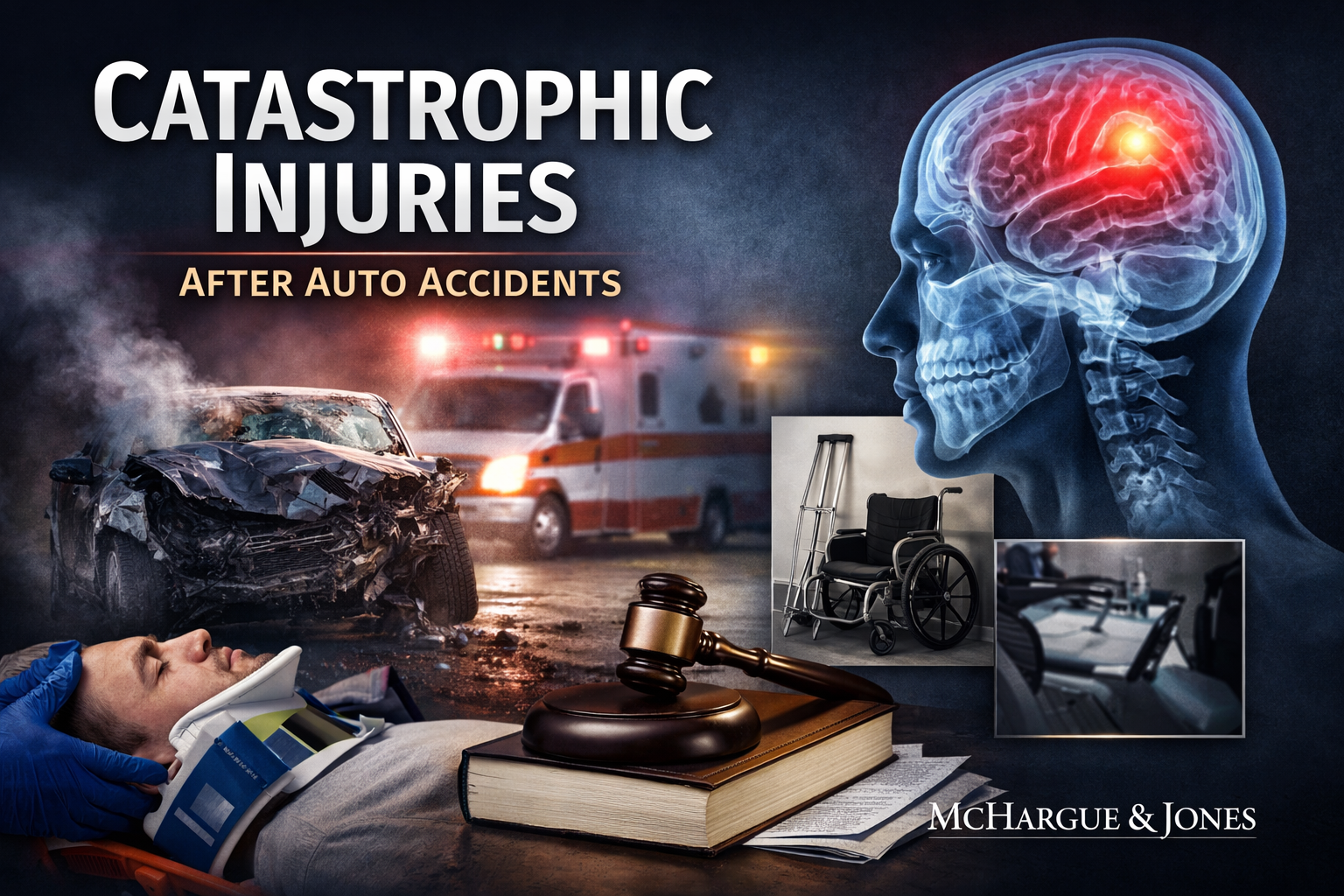


Catastrophic Injuries After Auto Accidents
Catastrophic injuries after a car accident in Illinois are serious, life-changing injuries that can cause permanent disability, disfigurement, paralysis, amputation, loss of mobility, brain damage, spinal cord damage, major surgery, or the inability to return to work.
These are not ordinary injury claims. Catastrophic car accident cases often involve emergency treatment, hospitalization, surgery, rehabilitation, future medical care, lost earning capacity, pain and suffering, loss of normal life, and aggressive insurance defenses. They may also involve low insurance policy limits, underinsured motorist claims, truck accident coverage, or wrongful death issues if the crash is fatal.
McHargue & Jones represents people injured in serious crashes throughout Chicago, Cook County, and Illinois. If you or a loved one suffered a catastrophic injury after a crash, our firm can help evaluate fault, insurance coverage, medical evidence, future care, and the full value of the claim.
Quick Answer: What Is a Catastrophic Injury After a Car Accident?
A catastrophic injury is a severe injury that causes permanent or long-term harm. After a car accident, catastrophic injuries may include traumatic brain injuries, spinal cord injuries, paralysis, amputations, severe broken bones, crush injuries, internal organ damage, severe burns, major surgery, permanent scarring, or fatal injuries.
These cases are usually high-stakes because the injured person may need future medical treatment, home modifications, assistive devices, vocational help, long-term care, or compensation for permanent pain, disability, and loss of normal life.
[/vc_column_text][/vc_column][/vc_row]
Was your life changed by a serious crash?
Catastrophic injury claims require fast investigation, careful medical proof, insurance coverage analysis, and long-term damages planning. McHargue & Jones can review your case and explain your options.
What Types of Injuries Are Considered Catastrophic?
A catastrophic injury is usually one that causes permanent disability, long-term impairment, disfigurement, loss of bodily function, major medical needs, or a major change in the person’s ability to work and live independently.
After an Illinois auto accident, catastrophic injuries may include:
- Spinal cord injuries
- Paralysis, paraplegia, or quadriplegia
- Traumatic brain injuries
- Amputations
- Severe broken bones and compound fractures
- Crush injuries
- Severe burns
- Internal organ damage
- Major neck, back, shoulder, or orthopedic surgery
- Permanent scarring or disfigurement
- Fatal injuries and wrongful death claims
For a broader explanation of auto injury claims, visit our main Chicago car accident lawyer page.
Common Catastrophic Injuries After Car Accidents
Google, insurance companies, doctors, and juries all look at the type of injury, the medical proof, the future care, and how the injury changes the person’s life. The most serious crash injuries often require expert medical evidence and long-term damages analysis.
Spinal cord injuries and paralysis
A spinal cord injury after a car accident can cause partial or complete paralysis, paraplegia, quadriplegia, loss of sensation, chronic pain, bowel or bladder problems, and permanent loss of mobility.
These cases may require wheelchairs, home modifications, attendant care, long-term rehabilitation, and life-care planning.
Traumatic brain injuries
A traumatic brain injury can happen when the head strikes a steering wheel, window, dashboard, pavement, or another object during a crash. Brain injuries may also occur from violent movement of the head.
Symptoms may include memory loss, confusion, cognitive problems, mood changes, headaches, seizures, and permanent neurological limitations.
Amputation and crush injuries
An amputation injury may happen at the crash scene or later if doctors cannot save a limb. Crush injuries can damage bones, blood vessels, nerves, and soft tissue.
These cases often involve prosthetics, phantom pain, rehabilitation, job loss, psychological trauma, and major lifestyle changes.
Broken bones and fractures
Severe broken bones after a crash may include compound fractures, shattered bones, pelvic fractures, hip fractures, rib fractures, leg fractures, arm fractures, and multiple fractures throughout the body.
Fracture cases may require surgery, plates, screws, rods, implants, casting, physical therapy, and future procedures.
Surgery after a crash
Surgery can change the value and complexity of a case because it often shows a more serious injury, longer recovery, scarring, future medical risk, and greater pain and suffering.
Related: neck surgery after a car accident and shoulder surgery after a car accident.
Fatal injuries
Some catastrophic crashes result in death. These cases may involve a wrongful death claim, a survival claim, funeral expenses, grief, loss of support, and the financial impact on surviving family members.
Spinal Cord Injuries, Paralysis, and Long-Term Care
A spinal cord injury is one of the most serious injuries that can happen in a car accident. These cases may involve herniated discs, fractured vertebrae, spinal cord compression, nerve damage, paralysis, paraplegia, or quadriplegia.
The value of a spinal injury claim depends on more than the first hospital bill. The case may also include:
- Emergency treatment and hospitalization
- Spine surgery
- Rehabilitation and physical therapy
- Wheelchairs, braces, walkers, or other assistive devices
- Home modifications
- Vehicle modifications
- Home healthcare or attendant care
- Future medical treatment
- Lost wages and reduced earning capacity
- Pain and suffering and loss of normal life
When a spinal injury involves permanent nerve damage or paralysis, the claim often requires medical experts, life-care planning, vocational opinions, and economic damages analysis.
Broken Bones, Fractures, and Orthopedic Surgery
Broken bones after a car accident can range from relatively straightforward fractures to catastrophic orthopedic injuries. A severe fracture may require surgery, hardware, hospitalization, infection monitoring, therapy, and long-term restrictions.
Examples include:
- Compound fractures
- Pelvic fractures
- Hip fractures
- Femur fractures
- Tibia and fibula fractures
- Arm, wrist, hand, or shoulder fractures
- Rib fractures with lung complications
- Multiple fractures in different parts of the body
When a fracture requires surgery, the case may be worth more than a conservative-treatment injury because surgery often adds medical cost, pain, scarring, recovery time, permanency risk, and future care. The same is true when a crash causes a serious shoulder injury requiring surgery. For more, read our guide on shoulder surgery settlement value after a car accident in Illinois.
Amputation Injuries After Auto Accidents
An amputation after a car accident can permanently change nearly every part of a person’s life. The injury may affect mobility, work, independence, self-image, mental health, home life, transportation, and future medical needs.
Amputation damages may include:
- Emergency surgery
- Revision surgery
- Prosthetics and replacement prosthetics
- Physical therapy and occupational therapy
- Phantom limb pain
- Home and vehicle modifications
- Psychological counseling
- Loss of earning capacity
- Permanent disability and disfigurement
- Pain and suffering and loss of normal life
Because prosthetics, revision care, and future medical needs can be expensive, amputation cases often require detailed future-damages evidence.
Severe Burns, Scarring, and Disfigurement
Severe burns may occur when vehicles catch fire, explode, or leak fuel after a collision. Burn injuries can involve emergency care, skin grafts, reconstructive surgery, infection risk, nerve damage, permanent scarring, and emotional trauma.
Scarring and disfigurement can be especially serious when the injury affects the face, hands, arms, legs, or other visible parts of the body. Facial injuries may also involve dental trauma, broken bones, eye injuries, and permanent appearance changes. Related: facial trauma after a car accident in Illinois.
Fatal Car Accidents and Wrongful Death Claims
When a catastrophic crash results in death, the case is handled differently than a non-fatal injury claim. A fatal car accident may involve a wrongful death claim, a survival claim, estate issues, funeral expenses, grief, loss of financial support, and the loss of the relationship suffered by surviving family members.
These claims often require careful handling because multiple family members may be affected, insurance limits may become an immediate issue, and evidence must be preserved quickly. For more, read our article on filing a wrongful death claim after a fatal car accident.
What Types of Crashes Cause Catastrophic Injuries?
Catastrophic injuries can happen in almost any serious crash, but certain accident types are more likely to cause spinal injuries, paralysis, fatal injuries, broken bones, amputations, burns, and surgery-level trauma.
High-speed crashes
Speed can increase the force of impact and the risk of serious injury. It may also matter when proving negligence.
Truck accidents
Semi-truck and commercial vehicle crashes can cause catastrophic injuries because of vehicle size, force, cargo, and commercial insurance issues.
Drunk or distracted driving
Drunk and distracted drivers can cause severe crashes because they may fail to brake, drift lanes, run lights, or strike pedestrians.
How Catastrophic Injuries Change Case Value
Catastrophic injury cases are different because the damages are usually long-term. A quick settlement offer may not account for future surgeries, complications, disability, lost earning capacity, home care, or decades of medical needs.
Potential damages may include:
- Past medical bills
- Future medical care
- Hospitalization and surgery
- Rehabilitation and therapy
- Prosthetics, wheelchairs, braces, and assistive devices
- Home healthcare
- Home and vehicle modifications
- Lost wages
- Loss of future earning capacity
- Pain and suffering
- Loss of normal life
- Disfigurement and disability
For the larger settlement-value framework, read how much a car accident case is worth in Illinois. For non-economic damages, read our guide on pain and suffering after a car accident in Illinois.
Does Surgery Increase Settlement Value After a Car Accident?
Surgery often increases settlement value, but it does not automatically guarantee a specific settlement amount. The value still depends on liability, medical proof, the surgery performed, the outcome, future care, pain and suffering, lost wages, permanent restrictions, and available insurance coverage.
Surgery can affect value because it may show:
- A more serious injury
- Higher medical bills
- More pain and recovery time
- Scarring or disfigurement
- Longer work absence
- Permanent restrictions
- Risk of future treatment or complications
However, even a strong surgery case can be limited by the at-fault driver’s insurance policy. That is why policy limits, UM/UIM coverage, and all possible defendants must be evaluated early.
Insurance Policy Limits Can Control the Practical Recovery
One of the most important issues in a catastrophic injury case is insurance coverage. Illinois minimum liability insurance may be far too small to compensate someone with paralysis, amputation, multiple surgeries, broken bones, brain injury, or fatal injuries.
If the at-fault driver only has a minimum policy, the available recovery from that driver’s insurance may be limited even if the damages are enormous. The next question is whether there are other sources of recovery, such as:
- Underinsured motorist coverage
- Uninsured motorist coverage
- Umbrella policies
- Commercial insurance coverage
- Trucking company policies
- Claims against multiple responsible parties
- Employer, vehicle owner, maintenance company, or product claims in the right case
Learn more about how insurance policy limits work in Illinois car and truck accident cases, underinsured motorist claims in Illinois, and uninsured motorist claims in Illinois.
Truck Accidents and Commercial Vehicle Catastrophic Injury Claims
Catastrophic injury claims involving semi-trucks, delivery trucks, construction vehicles, buses, and other commercial vehicles may be different from ordinary car accident claims. These cases can involve larger insurance policies, corporate defendants, driver logs, black box data, maintenance records, cargo issues, and multiple responsible parties.
When a truck crash causes a spinal cord injury, paralysis, amputation, severe fracture, surgery, or death, evidence needs to be preserved quickly. Trucking companies and insurers may start protecting themselves right away.
For more, visit our Chicago truck accident lawyer page and our guide on truck black box evidence.
How Fault Works in Illinois Catastrophic Injury Cases
Illinois is an at-fault state for car accident claims. That means the person or company that caused the crash may be responsible for the damages.
Illinois also uses modified comparative fault. If the injured person is found more than 50% at fault, recovery may be barred. If the injured person is 50% or less at fault, compensation may be reduced by the percentage of fault assigned.
In catastrophic injury cases, insurance companies may fight fault aggressively because the damages are high. Evidence may include the police report, photos, witness statements, vehicle damage, traffic camera footage, cell phone evidence, event data, black box data, toxicology evidence, and accident reconstruction opinions.
For more on Illinois fault rules, read Is Illinois a No-Fault Car Accident State? and what is included in a car accident police report.
Why Catastrophic Injury Cases Require Experts
Catastrophic injury cases often require expert analysis because the damages are not limited to what has already happened. The case may involve decades of future care, reduced earning capacity, permanent disability, and disputed medical causation.
Depending on the case, experts may address:
- Accident reconstruction
- Medical causation
- Spinal cord injuries
- Traumatic brain injuries
- Orthopedic surgery and fractures
- Amputation and prosthetics
- Future medical care
- Life-care planning
- Vocational loss and work restrictions
- Economic damages and future lost earning capacity
This is one reason catastrophic cases should not be rushed into a quick settlement before the full medical picture is understood.
What to Do After a Catastrophic Auto Accident
After a serious crash, the first priority is medical care. Once the emergency is under control, it is important to preserve evidence and avoid mistakes that can weaken the claim.
- Get emergency medical treatment immediately.
- Follow all treatment recommendations.
- Preserve medical bills, discharge papers, imaging, and specialist records.
- Photograph injuries, vehicle damage, and the crash scene if possible.
- Save witness information and police report details.
- Avoid recorded statements before understanding the injuries and legal issues.
- Do not accept a quick settlement before future care and policy limits are evaluated.
- Talk to a lawyer early if the injury involves surgery, paralysis, amputation, severe fractures, brain injury, or death.
If the crash just happened, start with our step-by-step guide on what to do after a car accident in Chicago. If the case involves a hit-and-run driver, read our Chicago hit-and-run accident lawyer page.
How McHargue & Jones Helps With Catastrophic Injury Claims
Catastrophic injury claims are rarely straightforward. They often involve serious medical issues, aggressive insurance defense tactics, disputed liability, high medical bills, future care, and pressure to settle before the full value is known.
McHargue & Jones helps by:
- Investigating the crash and preserving evidence
- Identifying all available insurance coverage
- Evaluating UM and UIM coverage
- Gathering medical records, bills, imaging, and expert opinions
- Documenting future medical care and life-care needs
- Analyzing lost wages and reduced earning capacity
- Addressing pain, suffering, disability, and loss of normal life
- Preparing the case for negotiation, mediation, litigation, or trial when needed
We handle car accident cases on a contingency fee, which means there is no attorney fee unless we win. Learn more about how much a car accident lawyer costs in Illinois.
Related Serious Car Accident Resources
- Chicago car accident lawyer
- How much is a car accident case worth in Illinois?
- Pain and suffering after a car accident in Illinois
- How insurance policy limits work in Illinois car accident cases
- Underinsured motorist claims in Illinois
- Uninsured motorist claims in Illinois
- Neck surgery after a car accident in Illinois
- Shoulder surgery after a car accident in Illinois
- Wrongful death after a fatal car accident
- Chicago truck accident lawyer
Frequently Asked Questions About Catastrophic Car Accident Injuries
What is a catastrophic injury after a car accident?
A catastrophic injury is a severe injury that causes permanent disability, disfigurement, loss of bodily function, or long-term impairment. Examples include traumatic brain injuries, spinal cord injuries, paralysis, amputations, severe burns, broken bones requiring surgery, internal organ damage, and fatal injuries.
Are spinal cord injuries and paralysis considered catastrophic injuries?
Yes. Spinal cord injuries and paralysis are usually considered catastrophic because they can cause permanent loss of movement, loss of sensation, chronic pain, loss of independence, and lifelong medical needs.
Does surgery increase the value of a car accident settlement?
Surgery often increases settlement value because it may show a more serious injury, higher medical bills, longer recovery, scarring, permanent restrictions, and greater pain and suffering. However, settlement value still depends on fault, medical proof, outcome, future care, and available insurance coverage.
What damages are available in a catastrophic injury case?
Damages may include past medical bills, future medical care, surgery, rehabilitation, assistive devices, home care, lost wages, reduced earning capacity, pain and suffering, disability, disfigurement, and loss of normal life.
What if the at-fault driver only has a $25,000 insurance policy?
If the at-fault driver has only minimum insurance, that policy may be far too small for a catastrophic injury claim. Other sources of recovery may need to be evaluated, including underinsured motorist coverage, umbrella policies, commercial coverage, trucking policies, and other responsible parties.
Are truck accident catastrophic injury cases different?
Yes. Truck accident cases may involve larger insurance policies, commercial defendants, federal trucking issues, black box evidence, maintenance records, driver logs, cargo issues, and multiple responsible parties. These cases should be investigated quickly.
What if a car accident caused a death?
If a crash caused a death, the case may involve a wrongful death claim and possibly a survival claim. These claims can involve funeral expenses, grief, loss of support, estate issues, and the harm suffered by surviving family members.
How long do I have to file a catastrophic injury lawsuit in Illinois?
In many Illinois personal injury cases, the deadline is generally two years from the date of the accident. Some claims may have shorter deadlines or special notice rules, especially if a government entity is involved. You should speak with a lawyer quickly so evidence and deadlines are protected.
Talk to a Chicago catastrophic injury lawyer today
If you or a loved one suffered a spinal injury, paralysis, amputation, severe fracture, surgery-level injury, burn injury, brain injury, or fatal injury after a crash, McHargue & Jones can review your case and help protect your claim.